
Vitamins: types and functions
Why are vitamins important? Types of vitamins and their functions [with table]
Why are vitamins important?
Vitamins are compounds which are essential, in small quantities, for the normal and correct functioning of our body metabolism. They perform hundreds of roles in our bodies, among which we can highlight shoring up bones, healing wounds and bolstering the immune system. They also convert food into energy and repair cellular damage.
There are two types of vitamins: water-soluble and fat-soluble vitamins. The water-soluble vitamins are vitamin B1, B2, B3, B6, B12, C, biotin, pantothenic acid and folate, whereas fat-soluble vitamins are the vitamin A, D, E, and K.

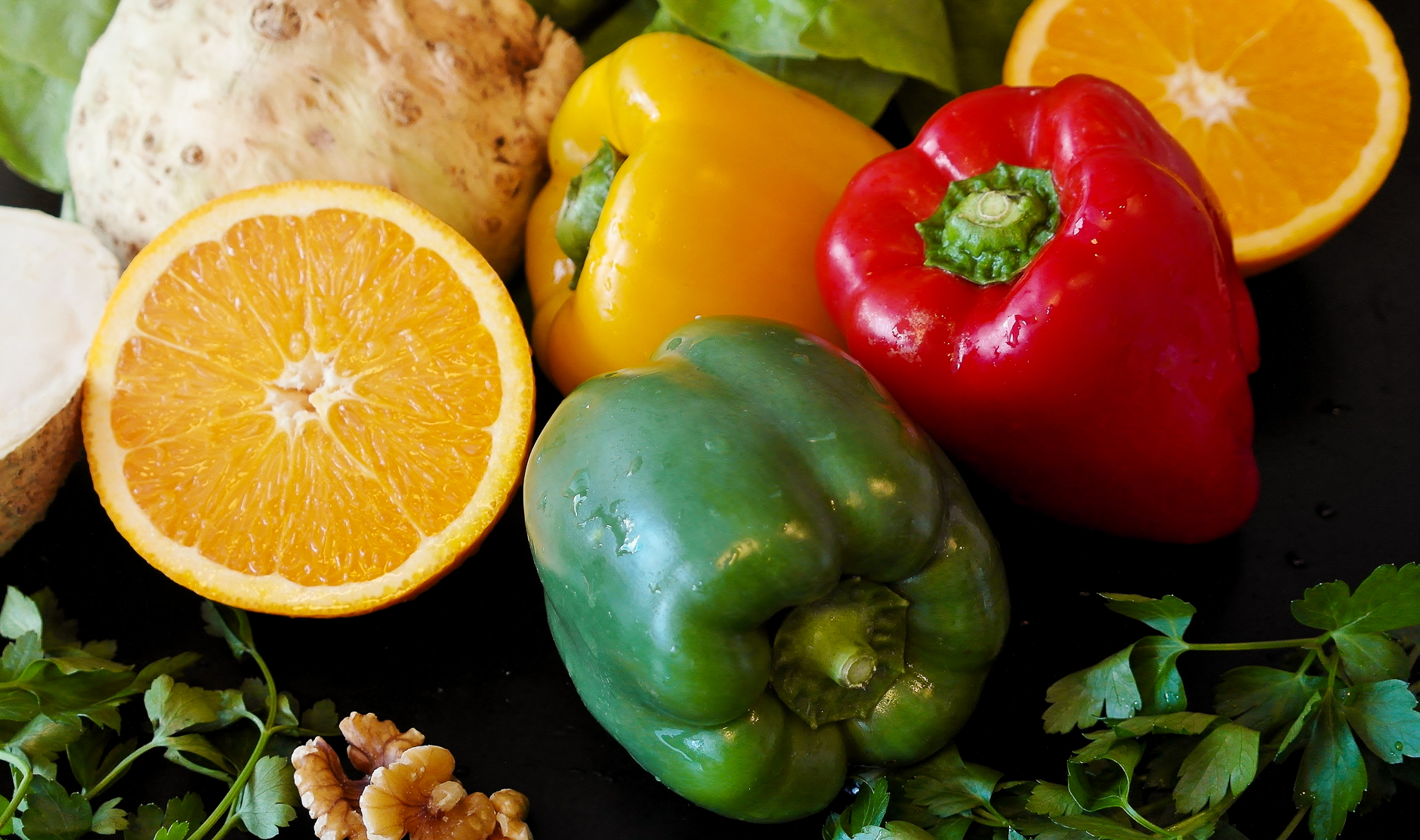
Products rich in vitamin C, one of the water-soluble vitamins
Vitamins have to be obtained from our daily diet, as our body cannot usually synthesize them. Moreover, vitamins can be sensitive to several factors (heat, moisture, pH, and light) leading to nutritional loss. Given the chemical heterogeneity of vitamins, the losses vary considerably during the processing of the food products. Therefore, to preserve these micronutrients, it is important not only to store the products in the right conditions, but also to choose the cooking method which helps to retain them.

Broccoli is a vegetable rich in vitamin C, A, E, K, and folate. Make sure to include it in your diet
In general, water-soluble vitamins are more unstable than fat-soluble vitamins, being the most unstable vitamins: vitamin C, thiamine, and folate.
The following table lists the main roles of each vitamin and their main food sources:
|
Vitamin |
Important for |
Main food source |
|
B1 Thiamine |
Energy metabolism Heart function and healthy nerve cells |
Yeast, yeast
extract, wheat bran, oatmeal, whole-grain cereals, pulses, nuts, lean pork,
liver, beef, lamb, chicken |
|
B2 Riboflavin |
Energy metabolism Normal vision and skin
health Body growth Production of red blood
cells |
Yeast extract, liver,
kidney, wheat bran, eggs, meat, milk, cheese |
|
B3 Niacin |
Energy metabolism Nervous system, digestive system, and skin
health |
Lean red meat,
poultry, liver |
|
B6 Pyridoxine |
Protein
metabolism Making red
blood cells Maintenance of brain function |
Lentils, pork, beef,
chickpeas, wholegrain cereals (oatmeal), wheat germ, brown rice. |
|
B12 |
Body metabolism Red blood cells formation Central nervous system maintainance |
Liver,
muscle meats, fish, eggs, cheese, milk |
|
Vitamin C |
Protein metabolism Immune system health Iron absorption Wound healing |
Guavas, bell
peppers, kiwifruit, strawberries, citrus fruits, papayas, broccoli, tomatoes,
snow peas, leafy greens |
|
Biotin |
Proteins and
carbohydrates metabolism Production of hormones and cholesterol |
Liver, eggs, soy-beans,
and peanuts |
|
Folate |
Red blood cells formation DNA production, which controls
tissue growth and cell function |
Broccoli,
brussels sprouts, cauliflower, peas, lettuce, red pepper, legumes |
|
Panthothenic
acid |
Energy metabolism Hormones and cholesterol production |
Mushrooms,
fish, avocados, eggs, lean chicken, beef, pork, sunflower seeds, milk, sweet
potatoes, lentils |
|
A |
Vision,
healthy skin and mucous membranes, bone and tooth growth |
Carrots, tomato,
dark leafy greens, broccoli, spinach, winter squashes, lettuce, dried
apricots, cantaloupe, bell peppers, tropical fruits |
|
D |
Calcium absorption of
the body |
Fatty fish (tuna, mackerel, and salmon), fish liver
oils, beef liver, cheese, egg yolk |
|
E |
Antioxidant Cell walls protection |
Sunflower seeds,
nuts, spinach, avocados, squash, kiwifruit, trout, shrimp, olive oil, wheat
germ oil, broccoli |
|
K |
Proper
blood clotting |
Kale, parsley, spinach, endive, green onions,
broccoli, Brussels sprouts, cabbage, lettuce |